

The New Face of Work: JPMorgan Chase’s Tower and the Future of the Office
(Image credit: Nigel Young, courtesy of Foster + Partners.)
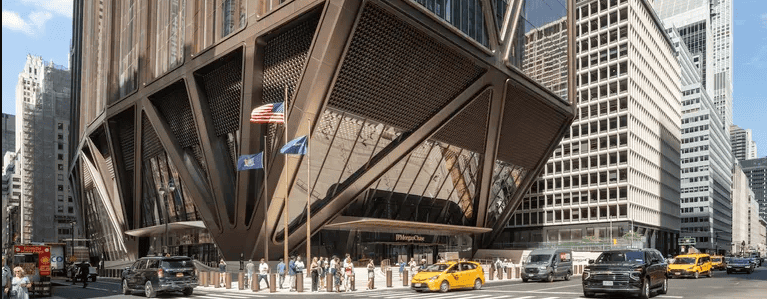
JPMorgan Chase’s new global headquarters in Midtown Manhattan has quickly become a symbol of both architectural ambition and corporate conviction. Rising 60 stories and designed by Foster + Partners, the $3 billion tower at 270 Park Avenue demonstrates how design excellence, sustainability, and technology can converge to redefine the modern workplace. It also reignites a pressing debate about what “returning to the office” really means in an era when flexibility and well-being have become the true currency of productivity.
A Monument to Sustainability and Design
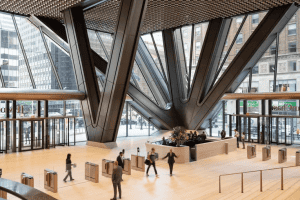
From its striking bronze-clad façade to its innovative structural megaframe, the building represents a technical and aesthetic triumph. The all-electric, net-zero tower is powered entirely by hydroelectric energy and is expected to achieve LEED Platinum v4 certification. Ninety-seven percent of materials from the site’s former Union Carbide building were recycled or upcycled, a sustainability benchmark that raises the bar for large-scale redevelopment.
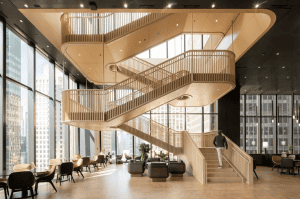
Inside, the design reflects principles of biophilic architecture that are increasingly guiding workplace innovation. Natural light floods the interior, air quality exceeds industry standards, and plants and organic materials soften the corporate edge. Circadian lighting and AI-driven building systems respond to employee comfort in real time. The result is a space that is technologically advanced yet deeply human in its sensibility, a concept that aligns with Livable Buckhead’s vision for healthier, smarter buildings.
(Image credit: Nigel Young, courtesy of Foster + Partners.)
The Human Side of the Future Workplace
Beyond its engineering prowess, JPMorgan Chase has crafted a workplace meant to attract and retain talent through experience, not just expectation. Eighteen restaurants, meditation rooms, and fitness studios blend hospitality with productivity, creating a “destination” rather than a duty. As CEO Jamie Dimon described it, the building is “a recruitment tool” that must be “commute-worthy.”
Yet this ambitious vision is undercut by the company’s rigid return-to-office mandate requiring employees to be in five days a week. This is where the contrast between design and policy becomes clear. Dropbox CEO Drew Houston recently criticized such mandates as “outdated,” arguing that forcing people back into traffic to sit on the same Zoom calls they could join from home misses the point of modern work. His “virtual-first” model, with employees working remotely most of the time and gathering intentionally for collaboration, reframes workplace design as a tool for choice and connection rather than control.
The lesson for employers is clear. Spaces like 270 Park Avenue succeed not because they demand attendance but because they make attendance worthwhile. If buildings are to thrive in a hybrid world, they must offer what home cannot: authentic community, access to nature, and environments that support focus and well-being.

(Image credit: Nigel Young, courtesy of Foster + Partners.)
Lessons for Buckhead’s Office Market
Atlanta and Buckhead stand at their own crossroads. The district’s Class A office landscape mirrors the national trend, where premier, amenitized buildings thrive while dated stock struggles. Newer developments continue to attract tenants willing to pay for quality and amenities, but sustainability and wellness are quickly becoming the new currency of value.
This is where Buckhead can lead. Biophilic design should become a defining feature of office environments, not an exception. Floor-to-ceiling windows, living walls, natural materials, and flexible layouts are not luxuries; they are strategies that attract tenants and retain employees. A growing body of research shows that biophilic spaces can reduce stress by as much as thirty percent and improve cognitive performance by fifteen percent. For developers and property managers, that is not a design trend; it is an investment in productivity and long-term stability.
At the same time, employers should avoid the temptation to confuse policy with culture. Mandating attendance may fill offices temporarily, but it does not build engagement. As Drew Houston put it, “trust over surveillance” is a better long-term strategy for performance and retention, particularly in a city where commutes on GA 400 and Peachtree Road can consume hours of daily life.
A Return to Quality, Not Just to the Office
JPMorgan Chase’s 270 Park Avenue tower is a monument to what the workplace can be when sustainability and human experience align. It proves that design can inspire people to return, but policy alone cannot. For Buckhead, the path forward lies in buildings and businesses that prioritize wellness, flexibility, and connection to nature. These are the qualities that turn offices into communities and commutes into choices.
As Livable Buckhead works with developers and employers to advance programs such as employer-assisted housing and alternative commuting incentives, the message is the same: The future of work is not about where you sit, it is about how the spaces we build support how we live, work, and thrive.
Sources:
• Wallpaper – “It’s really the workplace of the future”: inside JPMorgan Chase’s new Foster + Partners HQ
• Fortune – JPMorgan Chase’s Jamie Dimon returns bankers to the office with a $3 billion skyscraper
• JPMorgan Chase – Building Sustainability into Our New Headquarters
• Bloomberg – JPMorgan Planning to Bring Staff Back to Office Five Days a Week
• Livable Buckhead – Out of Touch or Just Outdated? Dropbox CEO Slams Return-to-Office Mandates and Atlanta Should Listen
• Livable Buckhead – Biophilic Design: A Smarter Blueprint for Buckhead’s Return-to-Office Future