

Final Weeks Under the Gold Dome: Key Legislation Advances as Session Nears Conclusion
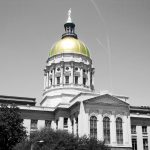
 As the 2026 legislative session enters its final stretch, activity under the Gold Dome has intensified, with lawmakers working through some of the most consequential days of the year. The Georgia House reconvened on Monday, March 16, for Legislative Day 32, marking the start of the 10th week of session. By the end of the week, the General Assembly reached Legislative Day 35, leaving just five legislative days remaining before adjournment on April 2. With Crossover Day behind them, House members shifted focus to reviewing Senate legislation, advancing bills through committee and bringing key measures to the floor. While the session is nearing its end, the pace has not slowed. In many ways, it has accelerated, as lawmakers work to finalize priorities and move impactful legislation across the finish line.
Immediate Tax Relief for Georgians: One of the most significant actions this week was the passage of House Bill 1199, which includes a temporary suspension of Georgia’s motor fuel excise tax for 60 days. With gas prices rising due to global instability, the measure is designed to provide immediate relief for both households and businesses. Georgia’s gas tax, currently set at 33.3 cents per gallon for gasoline and 37.3 cents for diesel, will be paused, with price impacts expected to reach consumers quickly as new fuel shipments arrive. The legislation also aligns Georgia’s tax code with recent federal updates and establishes a $100 million annual cap on the state’s low-income housing tax credit program through 2028, bringing more predictability to housing investment policies. After clearing both chambers, the bill was signed into law by Governor Brian Kemp, enacting the tax suspension immediately.
Additional tax relief was finalized through House Bill 1000, which provides one-time income tax refunds to eligible Georgians. Depending on filing status, taxpayers may receive up to $500, continuing a multi-year effort to return surplus funds to residents and reinforce the state’s fiscally conservative approach.
Expanding Access to Healthcare: Addressing healthcare shortages, particularly in rural areas, remained a central focus. Senate Bill 427 creates a pathway for internationally trained physicians to practice in Georgia under a provisional license. By allowing qualified doctors to work under supervision in underserved areas, the bill aims to strengthen the state’s healthcare workforce while creating a long-term pathway to full licensure.
The House also advanced Senate Bill 399, the Mason Sells AED Coordination Act, which expands access to automated external defibrillators and equips 9-1-1 operators with tools to guide callers through CPR and AED use during cardiac emergencies. The measure includes the development of a statewide AED location database, enabling faster response times in life-threatening situations.
Additional healthcare-related legislation included House Bill 571, which establishes a formal licensing framework for radiologist assistants, and House Bill 185, which modernizes Georgia’s dietetics and nutrition licensing system while improving workforce mobility across state lines.
Strengthening Public Safety and Accountability: Public safety initiatives also moved forward this week. Senate Bill 383 updates the role of child fatality review committees, shifting their focus toward prevention and expanding participation to include local school representatives. The goal is to better identify risk factors and reduce preventable child deaths.
Senate Bill 470, the Emergency and Public Safety Signal Protection Act, targets the use of signal jammers that interfere with emergency communications. The legislation classifies these devices as contraband and establishes felony penalties, reinforcing the reliability of emergency response systems.
Meanwhile, Senate Bill 452 enhances retirement benefits for law enforcement officers by increasing employer contributions to retirement accounts, reflecting ongoing efforts to support recruitment and retention within public safety roles.
Addressing Social and Economic Challenges: Lawmakers also took steps to address broader social issues. Senate Bill 523 establishes a standardized process for reporting and addressing discrimination in public schools and higher education institutions, including oversight mechanisms and potential funding consequences for noncompliance.
Senate Bill 570 introduces mandatory annual human trafficking awareness training for hotel and short-term rental employees, recognizing the role these environments can play in identifying and preventing trafficking activity.
In addition, Senate Bill 170 creates a grant program to fund backup generators for rural hospitals, a direct response to vulnerabilities exposed during recent severe weather events. The program aims to ensure continuity of care during emergencies, particularly in underserved areas.
Looking Ahead: As the General Assembly approaches its final days, attention now turns to reconciling remaining legislation and preparing for final passage before adjournment. With only a handful of legislative days remaining, the coming week will be critical in determining which measures ultimately become law. The final phase of the session is often the most decisive, where months of policy development culminate in action. With key investments, reforms and protections advancing across multiple sectors, the closing days of the 2026 legislative session are set to shape Georgia’s policy landscape well beyond adjournment.