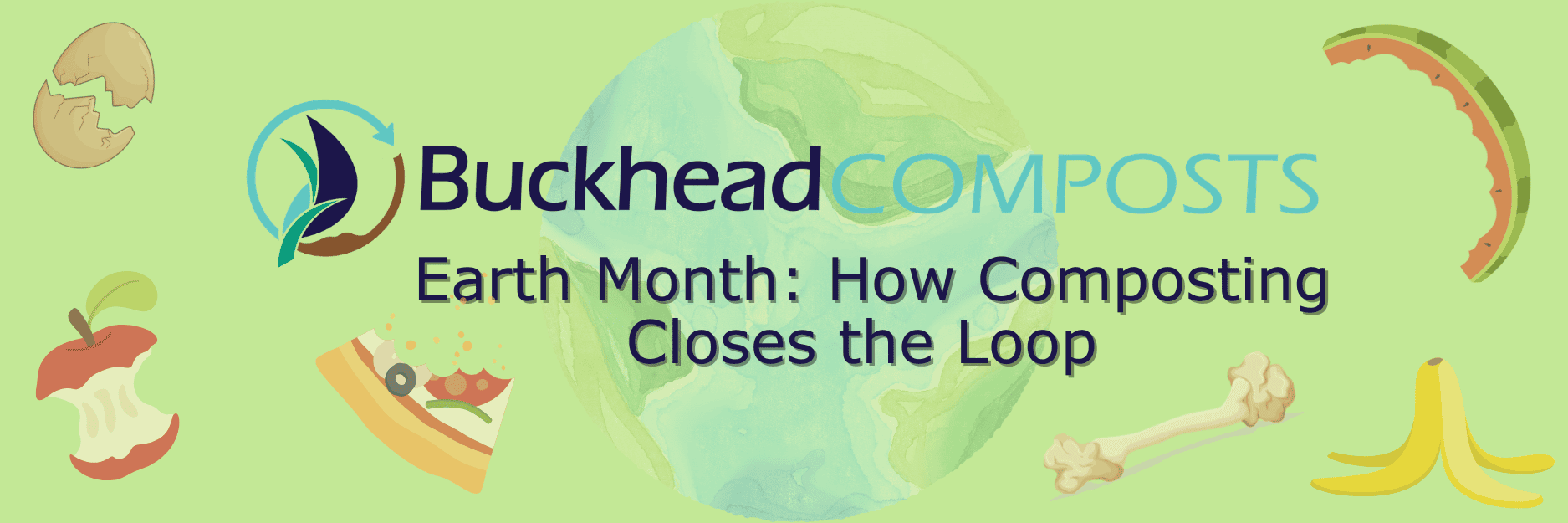


Earth Month: How Composting Closes the Loop
April is Earth Month, a time to step back and look at how our everyday habits add up — and how small actions can create surprisingly big benefits. One of the simplest ways to do that? Composting.
At its core, composting is about closing the loop. Instead of treating food scraps like trash, composting keeps valuable nutrients in use and puts them back where they belong: in the soil.
And yes — those banana peels and coffee grounds you’re tossing into the compost bin—they’re doing more than you might think.
Keeping Good Stuff Out of the Landfill
Each year in the U.S., we send over 167 million tons of trash to landfills. What’s even more surprising? In most cases, nearly half of that material could have been composted — things like food scraps, yard waste, and other organic materials.
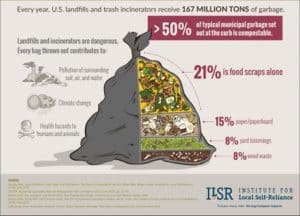
That’s a lot of nutrient-rich material that could be:
- Improving soil on farms
- Supporting parks and green spaces
- Strengthening landscaping around our communities
Instead, when food scraps are landfilled, all of that potential is lost.
As one compost educator put it perfectly:
“Food scraps, much like recyclables, still have a valuable purpose — but when landfilled, their usefulness cannot be utilized.”
Composting keeps those nutrients in play and gives them a second (and third, and fourth) life.
Reducing Emissions with Food Waste
When food waste breaks down in a landfill, it doesn’t have access to air and creates methane, a potent gas released during decomposition. Composting avoids this by allowing food scraps to break down properly in a controlled environment.
We’ll dive deeper into this topic later in the year, but the takeaway is simple: composting is a more responsible way to manage organic materials.
Healthy Soil Does a Lot of Heavy Lifting
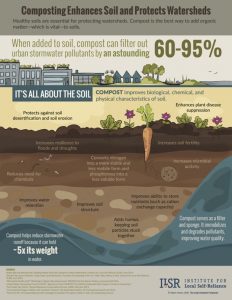
Compost isn’t just “dirt.” It improves soil in powerful ways:
- Helps soil retain water (meaning less runoff and less irrigation)
- Supports stronger plant growth
- Improves resilience during dry or extreme weather
- Boosts food production and long-term soil health
Healthy soil supports everything from the food we eat to the green spaces we enjoy every day.
Composting = A Circular Economy Win
Composting is one of the clearest examples of a circular economy at work:
- Food is grown
- Food is eaten
- Scraps are composted
- Nutrients return to the soil
- More food can grow
No complicated sorting. No guessing where materials end up. Just a clean, natural loop that makes sense.
In a world where people are often skeptical about whether their efforts matter, composting stands out as something tangible, visible, and effective.
Monthly Challenge:
The property that composts the most per unit will receive coupon cards to Boone’s, providing a free appetizer and a discounted flight of beers from Monday Night Brewing. It’s the perfect time of year to get out and enjoy their awesome patio overlooking Bobby Jones Golf Course and stellar skyline views.

Want to join the BuckheadCOMPOSTS program and receive 1 year of free composting at your multifamily property? Email compost@livablebuckhead.org