

Climate Leadership Is Shifting: COP30 Offers Useful Context for Buckhead’s Future.
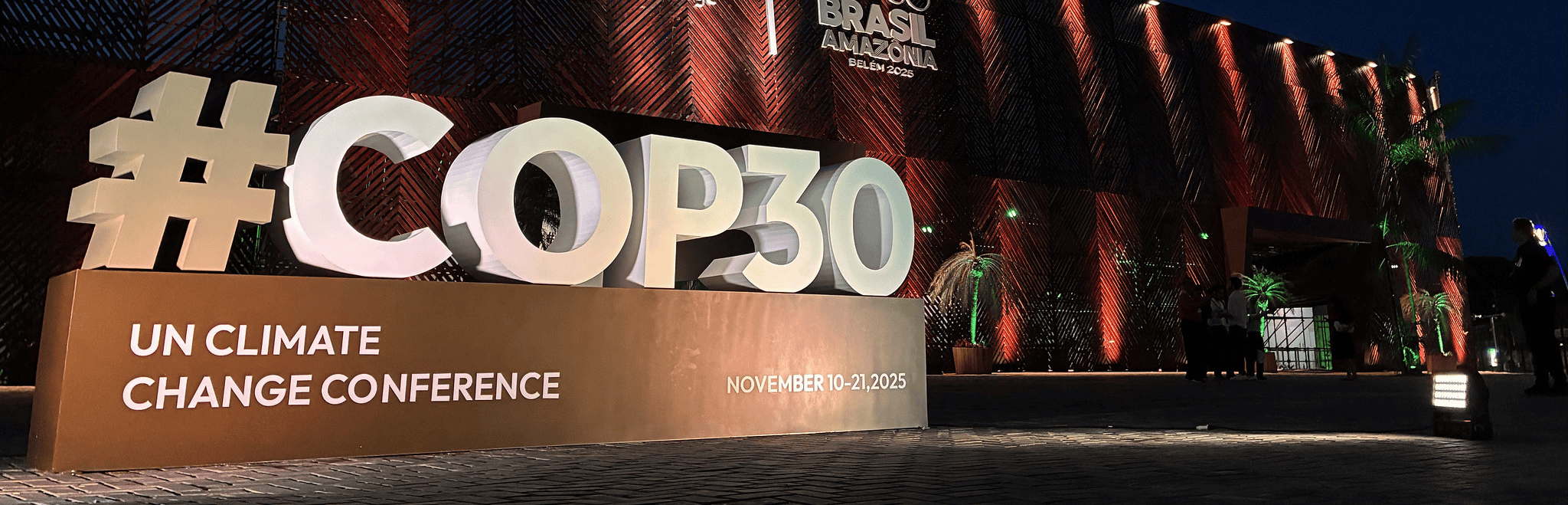
 COP30, held this year in Belém, Brazil, is the world’s regular checkpoint for understanding where energy, technology and global economic trends are heading. Even when national politics shift, the discussions at this summit offer insight into how markets, supply chains and major international players are approaching long-term growth and resilience. For a district like Buckhead, shaped by global employers, real estate investment and major infrastructure decisions, this broader context matters.
Global Leadership Without Washington: The United States played a quieter role at this year’s summit, with fewer federal representatives and fewer major corporate leaders attending. In their absence, China’s expanding clean-technology footprint drew significant attention. As The New York Times noted, Chinese exports of solar panels, batteries and electric vehicles are reshaping development patterns in rapidly growing economies such as India, Vietnam and Brazil.
These shifts highlight a larger reality: global technology and energy markets continue to evolve quickly, regardless of political cycles. Buckhead’s commercial properties, transportation systems and employers ultimately operate within those wider market trends.
States and Local Leaders Stepping Forward: With the federal presence more limited, state and municipal voices played a larger role at COP30. Their emphasis on affordability, practicality and near-term benefits mirrors how Buckhead typically approaches mobility, greenspace and quality-of-life projects. Initiatives like PATH400, the Buc shuttle and commute incentives are grounded in everyday improvements that benefit residents, employees and visitors.
Brazil’s Mixed Approach Reflects Common Tradeoffs: Brazil, the host nation, demonstrated the balancing act many regions face. The country sharply reduced Amazon deforestation while also allowing oil exploration near the river’s mouth. Reporting from COP30 noted that this decision raised concerns among environmental advocates, though Brazilian officials framed it as part of a longer-term economic strategy.
Buckhead experiences its own version of these tradeoffs. The district continues to grow with office, residential and retail development while simultaneously investing in trails, parks, mobility programs and sustainability initiatives. Economic vitality and environmental improvement often move in tandem rather than in conflict.
A Quieter Corporate Presence: Previous climate summits often featured high-profile American CEOs. This year, many companies chose a lower-profile approach. The Times reported that no major U.S. corporate leaders attended COP30, a notable change from past years. Even so, companies continue working on operational efficiency, energy management, resilience and workforce mobility behind the scenes.
For Buckhead employers, these efforts translate into continued interest in practical, local solutions: commute programs, the Buc’s last-mile service, walkability improvements, waste reduction and greenspace enhancements all support business needs in ways that align with market trends rather than political messaging.
Global Emissions Trends Still Influence Planning: A related COP30 analysis found that global emissions reached another record in 2025, though China’s emissions may be leveling off after decades of growth. These trends reinforce the importance of long-term planning for energy use, mobility patterns and extreme weather—factors that directly affect Buckhead’s infrastructure and property values.
What It Means for Buckhead: COP30 provides a useful lens for understanding the forces shaping global markets, regardless of political debate. For Buckhead, the implications are clear.
-
Local leadership remains essential. Community partners, property managers and employers drive improvements that meaningfully impact daily life.
-
Market trends matter. Mobility upgrades, greenspace investments and energy-efficient practices often deliver operational and financial benefits.
-
Competitiveness should remain central. As global markets evolve, Buckhead’s ability to offer strong mobility options, appealing public spaces and reliable infrastructure will help keep it attractive to residents, workers and employers.
While global negotiations continue, Buckhead’s best strategy remains the same: stay practical, forward-looking and responsive to the economic and technological trends shaping cities across the world.
Sources
https://www.nytimes.com/2025/11/10/climate/cop30-belem-climate-energy-technology-china.html
https://www.nytimes.com/2025/11/12/climate/greenhouse-gas-emissions-china.html
https://www.nytimes.com/2025/11/12/business/un-climate-corporate-executives.html
https://www.nytimes.com/2025/11/04/world/americas/brazil-oil-drilling-amazon-cop30.html