

BuckheadCOMPOSTS: Recycling Walked So Composting Could Run
For most of us, “being sustainable” probably started with a blue recycling bin.
We learned to rinse out milk jugs, flatten cardboard boxes, and debate whether the pizza box was too greasy to recycle. Over the last 50 years, recycling has become such a normal part of American life that it’s hard to imagine a time before curbside pickup and the ever-present triangular arrow symbol.
But the funny thing is, we tried to tackle the harder problem of inventing ways to reuse manufactured items before racking in the easier win. Nature perfected its own recycling process–composting–long ago. All we need to do is scale it to achieve many of the sustainable wins we’ve invested billions in chasing.
Recycling Changed the Way We Think About Waste
Modern recycling really took off in the United States during the 1970s. Disposable packaging, single-use plastics, and a growing amount of litter had become impossible to ignore. Public awareness campaigns (the famous “Crying Indian” commercial) encouraged Americans to think differently about waste and helped launch the modern environmental movement, memorialized by the first Earth Day in 1970.
Over the following decades, cities and counties invested heavily in recycling infrastructure. Material Recovery Facilities (MRFs) sprang up across the country, manufacturers found new uses for recycled materials, and state and local governments began requiring recycling in homes and businesses.
Today, Americans recycle or compost roughly 94 million tons of municipal solid waste each year, representing about 32% of everything we throw away. That number has steadily increased over the past several decades as recycling programs have expanded and industries have learned how to recover valuable materials like aluminum, steel, paper, cardboard, and certain plastics.
And that’s important.
Recycling conserves natural resources, reduces the need to mine or harvest virgin materials, and often uses significantly less energy than manufacturing products from scratch. Recycling an aluminum can, for example, saves about 95% of the energy required to make one from raw materials. Paper recycling reduces the demand for trees. Steel recycling reduces mining. Glass can be recycled over and over again without losing quality.
It’s one of our greatest environmental success stories.
But it’s also…kind of complicated.
Recycling Asks Us to Learn the Rules
Can this yogurt cup be recycled?
Does the lid stay on?
What about the plastic window in this cardboard box?
Can greasy pizza boxes go in?
Do I need to remove the label?
The questions never seem to end.
Different communities accept different materials. Packaging changes every year. Markets for recycled materials fluctuate. And contamination—putting the wrong item in the recycling bin—can slow down sorting facilities or reduce the value of otherwise recyclable materials.
That’s not to say recycling isn’t worth doing—it absolutely is.
But it requires us to become surprisingly knowledgeable about products that were never designed with end-of-life in mind.
Composting Is Nature’s Original Recycling Program
Composting, on the other hand, has been quietly doing its job for…well…millions of years.
Long before humans built recycling facilities, forests were recycling themselves.
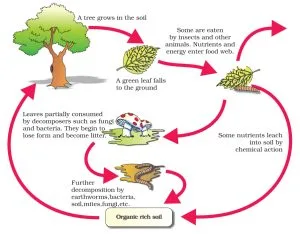 Leaves fell.
Plants died.
Animals left behind organic matter.
Microbes, fungi, insects, and other organisms broke everything down and returned those nutrients to the soil, where they helped grow the next generation of plants.
Nothing was wasted.
Nature doesn’t have a landfill.
For most of human history, food scraps naturally found their way back into the earth. It wasn’t until modern waste collection systems and widespread landfilling became common that we began treating food as something to bury instead of something to reuse.
Today, we’re beginning to rediscover that original system.
Food Waste Is Bigger Than Most People Realize
One reason composting has gained so much attention in recent years is because we’ve started measuring the scale of food waste—and the numbers are staggering.
In the United States, approximately 35% of all food produced goes unsold or uneaten. Food is lost at nearly every step of the supply chain—from farms and food manufacturers to grocery stores, restaurants, and our own refrigerators. Fruits and vegetables account for more than one-third of that wasted food.
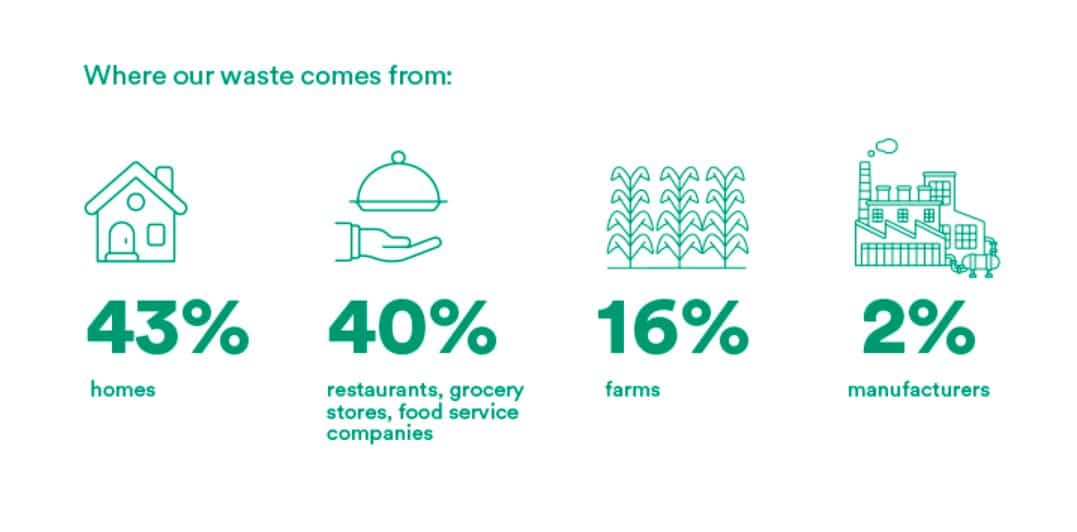
When that food ends up in a landfill, its story doesn’t end there.
Unlike a compost pile, landfills are designed to keep air and water out. Without oxygen, food breaks down very slowly and produces methane, a greenhouse gas significantly more potent than carbon dioxide over the short term. In the US, organic waste alone accounts for emissions equivalent to those generated by 37 million cars or more than 42 coal-fired power plants.
Composting changes that story.
Instead of becoming a waste product, food scraps become a resource.
Reframing Food Scraps
One of the greatest successes of the recycling movement wasn’t just building collection programs—it was changing the way we think. Cans, newspapers, and glass bottles stopped being viewed as trash and started being seen as valuable resources with a second life.
Composting asks us to make that same mental shift.
A banana peel isn’t really waste—it’s simply nutrients in the wrong place.
When food scraps are buried in a landfill, the valuable nutrients they contain are lost. But when they’re composted, they continue their journey.
That’s what a circular economy looks like—keeping valuable resources in use for as long as possible, whether they’re made by people or grown by nature.
Healthy Soil Is Becoming Increasingly Valuable
Another reason composting has become such an important conversation is what’s happening beneath our feet.
Around the world, soils are losing organic matter through intensive agriculture, erosion, and development. Healthier soils don’t just grow healthier plants—they also retain more water, reduce erosion, support beneficial microorganisms, and require fewer synthetic inputs.
Adding compost helps rebuild that organic matter.
Think of compost like a sponge mixed into the soil. It improves soil structure, helps roots access nutrients, and increases the soil’s ability to hold moisture during dry periods. That’s good news for farms, parks, gardens, street trees, and landscapes alike.
In other words, compost doesn’t just help us manage waste, it helps improve one of our most important natural resources.
Momentum Is Growing
Just as recycling slowly became part of everyday life, composting is beginning to follow a similar path.
In 2020, Vermont became the first state to ban all household food waste from landfills. Today, roughly 72% of Vermonters compost or divert food scraps through composting or animal feed programs.
Other states including California, Massachusetts, Connecticut, Rhode Island, New York, and New Jersey have adopted food waste bans or recycling requirements for certain generators of organic waste. More cities are introducing curbside compost collection, and the market for compost continues to expand as demand grows from agriculture, landscaping, and public agencies.
It feels a lot like recycling did a few decades ago.
The infrastructure is growing.
The public is learning.
The industries are evolving.
So…Did Recycling Walk So Composting Could Run?
Maybe.
Or maybe composting has been running the marathon all along—and we’re just finally catching up.
Nature has been recycling food for millions of years. Forests don’t have trash cans. Leaves fall, plants decay, nutrients return to the soil, and new life grows. It’s a beautifully efficient system, just not one that always kept pace with modern cities and busy lives.
The recycling movement helped us rethink waste, build collection systems, and create entirely new industries around giving materials a second life. Composting builds on that foundation by applying the same circular thinking to food. Today, compost collection, industrial composting facilities, and growing public interest are helping nature’s oldest recycling system work at the speed of modern life.
As CompostNow likes to say:
If it grows, it goes.
Maybe recycling taught us to look differently at our trash. Composting simply reminds us that some of our most valuable resources were never trash to begin with.
Sources
- U.S. EPA, National Overview: Facts and Figures on Materials, Wastes and Recycling
- U.S. EPA, From Farm to Kitchen: The Environmental Impacts of U.S. Food Waste
- USDA & EPA estimates on food waste
- ReFED, Insights Engine (U.S. food waste data)
- Vermont Agency of Natural Resources (Universal Recycling Law)
- RethinkWaste, The Importance of Recycling and Composting (2020)
- TIPA, Recycling vs Composting (2021)
- Earth.org, 10 Food Waste Statistics in America (2022)