

BuckheadCOMPOSTS: How Composting Helps Prevent Methane Emissions
September 21 is Zero Emissions Day, a day that encourages all of us to think about the environmental impacts of our everyday choices. While most conversations about emissions focus on cars, power plants, and industry, there’s another source that often flies under the radar: food waste.
Believe it or not, what happens to your banana peel after breakfast can have a very different impact on the emissions depending on whether it ends up in a landfill or a compost pile.
One Banana Peel, Two Different Futures
Let’s say you’ve just eaten a banana.
If you toss the peel into the trash, it eventually ends up in a landfill. There, it’s buried beneath layers of waste where there is very little oxygen. As food scraps break down in these oxygen-poor conditions, they produce methane, a greenhouse gas that is 28 times more powerful than carbon dioxide at trapping heat.
Now imagine that same banana peel goes into a compost bin.
In a composting facility, food scraps decompose in the presence of oxygen as the pile gets turned. Instead of creating methane, the material is transformed into nutrient-rich compost that can be used to improve soil health and help plants grow.
Same banana peel. Completely different outcome.
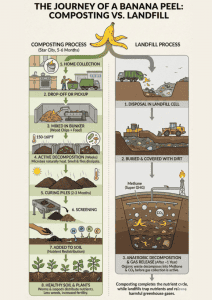
Source: Cardinal News, “Virginia is learning that composting doesn’t stink after all.”
Why Scientists Are Paying So Much Attention to Methane
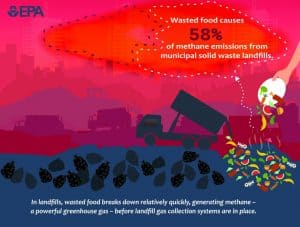
Source: EPA
Carbon dioxide (CO₂) tends to get most of the attention when we talk about climate change, but methane (CH₄) has become a major focus in recent years because reducing methane emissions can have a faster impact on slowing near-term warming.
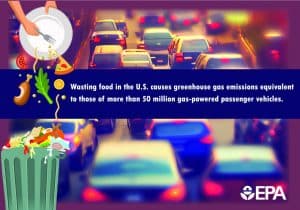
Landfills are currently the third-largest source of human-caused methane emissions in the United States, and food waste plays an outsized role in the problem.
According to the EPA:
- Food waste makes up about 24% of all material sent to municipal landfills.
- An estimated 58% of methane emissions released from municipal landfills come from food waste.
- More than 50% of municipal garbage set out at the curb could be composted.
In other words, food scraps may not look like a major climate issue, but they have a surprisingly large impact.
A Climate Action Hiding in Your Kitchen
Source: EPA
When people think about reducing emissions, they often picture buying an electric vehicle or installing solar panels.
Those are great solutions, but some climate actions are much simpler.
Every time you compost instead of throwing food scraps in the trash, you’re helping prevent methane emissions before they start.
That’s the power of Buckhead Composts.
This Zero Emissions Day, take a second look at what’s in your kitchen scrap bin. Those banana peels, coffee grounds, and eggshells may seem small, but they’re part of a much bigger story about how our communities can reduce waste, lower emissions, and create healthier soils at the same time.
And that’s something worth composting for. 🌱