

Buckhead and the Future of EV Charging: From Vision to Everyday Reality
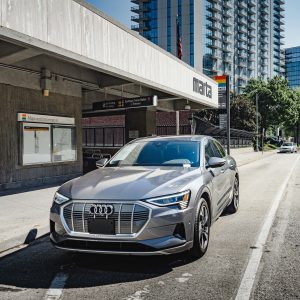
Audi Atlanta showcases the future of electric driving, putting Audi EVs in the spotlight.
Electric vehicle charging has shifted from a future ambition to a present-day necessity. As EV adoption accelerates, the charging network is expanding and improving to meet demand. For Buckhead, this progress is reshaping how residents, workers, and visitors experience transportation.
Nationally, the charging market has expanded rapidly, with hundreds of thousands of public stations and millions of private chargers now in place. This expansion is driven by strong consumer demand and investment in infrastructure, and growth shows no sign of slowing.
In Buckhead, the impact is clear. Charging access is becoming more consistent across multifamily housing, office buildings, and retail centers. Whether at home, at work, or on the go, the ability to plug in is becoming part of everyday life.
The number of public charging ports in the U.S. has more than doubled in just a few years, and projections show the total exceeding half a million by 2030. For Buckhead, this means stronger regional connectivity and the confidence that drivers can count on charging not just locally, but wherever they travel.
The surge in EV production is matched by consumer demand for reliable charging. Businesses and property owners are increasingly offering chargers as a practical amenity that attracts tenants, customers, and employees. For drivers, the growing network provides peace of mind that power is available when and where it’s needed.
Federal support is also playing a role. After a months-long freeze, the Trump administration recently resumed funding through the National Electric Vehicle Infrastructure (NEVI) program. This decision reopened a multibillion-dollar pipeline to expand fast chargers along highways nationwide, ultimately strengthening the foundation for local markets like Buckhead.
Smarter, Faster, More Reliable
 Today’s charging stations are not only more common but also more advanced. Features like plug-and-charge authentication, mobile apps for real-time availability, and DC fast charging have improved convenience and reliability. Older systems are also being upgraded, ensuring that drivers have a smoother experience across the network.
The benefits of charging infrastructure reach beyond vehicles:
-
Quality of life: Easier charging makes EV ownership practical for families and visitors.
-
Business advantage: Retail centers, office campuses, and multifamily properties gain a competitive edge by offering charging.
-
Energy resilience: Smarter charging helps manage demand on the grid and strengthens long-term reliability.
Even as the EV industry faces ups and downs, the expansion of charging infrastructure continues at a steady pace. New sites are opening, networks are upgrading, and access is improving, giving drivers greater confidence to make the switch.
The future of charging is not only about adding more plugs. It is about building a network that is reliable, easy to use, and integrated into daily life. In Buckhead, the ongoing expansion of chargers signals a community investing in modern infrastructure that supports growth, mobility, and long-term stability.
The takeaway: charging in Buckhead is no longer a vision for the future, it is becoming a part of everyday reality.
References
Trump administration resumes NEVI EV charger funding
Electrify America expansion and EV market growth